- AD150
- Posts
- AI Search = 34% of B2B Discovery. Here’s What Actually Converts
AI Search = 34% of B2B Discovery. Here’s What Actually Converts
Social media claims 46% of discovery and AI search hits 34%, while 87% of teams see productivity gains but only 39% see a performance lift.

Good morning, ! This week we’re tracking what actually moves B2B performance in 2026—specificity, credibility, and measurable outcomes. With 46% of discovery now happening on social and AI search driving 34% of first touch, discoverability is shifting fast. More volume isn’t fixing the funnel: while 38% of teams cite lead shortages, long sales cycles and misalignment persist. Even as AI spend rises on 87% productivity gains, only ~39% see performance lift. The signal is clear: trust and clarity convert better than reach.
For brands looking to reach private equity decision-makers, PE150 delivers access to 140,000+ deal teams, operating partners, and portfolio leaders—placing your message alongside the insights they trust to source smarter and execute faster.
Join 50+ advertisers who reach our 400,000 executives: Start Here.
Know another marketer who’d love this? Pass it along—they’ll thank you later! Here’s the link.
AUDIENCE DATA DIVE
Big Bets, Star Power, and Billion-Dollar Plays: What Gets Investors Clicking
Sports investment headlines that tie massive capital flows to high-profile assets are crushing it—driving 60–78%+ open rates when featuring landmark deals, marquee teams, or athlete-led ventures. Think $10B Lakers sale, Nike’s $200M bet on Alcaraz, or Mayweather’s $63M empire—specific, high-scale, and instantly recognizable. Even Sports Tech & Media can outperform when linked to tangible ROI, but broad “innovation updates” barely hit 30%. The pattern is clear: investors click for big numbers, visible assets, and actionable investment stories—not buzzwords. (More)
AD INTEL
What B2B Content Actually Gets Discovered in 2025

B2B content discovery is undergoing a structural shift. In 2025, social media (46%) is now the primary way qualified prospects first hear about a company—overtaking traditional organic search. Even more telling: AI search platforms (34%) now outpace organic search (30%), email (29%), and paid media (25%), signaling a rapid reordering of the discovery stack.
When it comes to lead-generating formats, video leads the pack (37%), followed closely by LinkedIn articles, paid media, and research reports (31% each). Webinars (24%) still play a role, but long-assumed staples like press releases and interactive tools trail behind.
The takeaway is clear: discoverability now favors platform-native, credibility-rich content that performs well in both social feeds and AI-driven search environments. For B2B advertisers, the opportunity isn’t just creating more content—it’s investing in formats and channels where buyers are already looking. (More)
PUBLISHER SPOTLIGHT
Reach 140,000+ Private Equity Decision-Makers
PE150 is where private equity deal teams, operating partners, portfolio leaders, and the ecosystem around them stay ahead of what’s shaping the market. Each issue reaches the executives driving investing, value creation, and portfolio execution—placing your company alongside the insights they rely on to source smarter, operate faster, and win deals in a competitive environment.
We work closely with partners to structure campaigns that fit their goals, from awareness to demand generation. Our team supports campaign strategy, messaging, and creative development to ensure your placement feels native, credible, and effective within the PE150 format.
THE FUNNEL REPORT
Why Lead Volume Isn’t the Real Bottleneck

Most B2B teams still frame demand gen as a volume problem—but the data tells a different story. While 38% of marketers cite low lead volume as their top challenge, nearly as many point to long sales cycles (19%) and sales–marketing misalignment (19%) as equally limiting growth factors. Add in poor lead quality (13%), and it becomes clear that the funnel is leaking well past the top.
The implication is straightforward: generating more leads won’t fix a broken middle. Without shared definitions of quality, tighter handoffs, and content aligned to buying stages, additional volume simply increases friction downstream.
High-performing teams are responding by investing in lead scoring, intent signals, and stage-based nurturing—not just more acquisition. In today’s B2B funnel, conversion and alignment matter more than raw reach. (More)
BUDGET SHIFTS
Why AI Content Spend Keeps Rising—Despite Mixed Performance Gains

AI-assisted content creation is already reshaping how B2B teams allocate marketing budgets. The strongest impact shows up upstream: productivity (87% improved) and operational efficiency (80% improved) lead the way, making AI a clear cost-leverage tool for stretched teams. Creative capabilities also see meaningful uplift, with 65% reporting improvement.
But downstream results are more nuanced. While 58% say content quality has improved, and 39% see gains in content performance, a sizable share report no change—or say it’s too soon to tell. In other words, AI is delivering efficiency faster than effectiveness.
That gap explains current budget behavior: marketers are funding AI first as an operational multiplier, not a guaranteed performance engine. The next phase of spend will hinge on whether teams can translate speed and scale into measurable conversion lift, not just output. (More)
BUYER’S ROOM
Why Trust Now Decides the B2B Shortlist
B2B buyers are making decisions differently—and brand is quietly doing more work than most performance dashboards reveal. As buying groups expand and decisions stretch across more stakeholders, buyers are spending more time researching independently, often long before sales ever enters the picture. In that window, trust isn’t built through a single interaction—it compounds through repeated exposure, consistent messaging, and credible signals.
That reality is reshaping priorities inside marketing teams. In a 2026 Harris Poll survey, 45% of marketers plan to double down on customer experience and retention, while 43% are prioritizing brand building and long-term differentiation. The goal isn’t just awareness—it’s reducing perceived risk when buyers begin internal conversations.
When attention is fragmented and content is abundant, familiar brands are easier to defend internally and faster to align around. In today’s Buyer’s Room, recognition equals confidence—and confidence shortens decisions. (More)
CREATIVE THAT CONVERTS
Why the First 2 Seconds Decide B2B Ad Performance
In today’s condensed attention economy, B2B creative needs to earn relevance almost immediately. People scroll fast — often in under 2.5 seconds — and most ads that don’t show a clear hook in that window fail to register in memory or trigger engagement. Research shows that ads capturing attention beyond the first 2 seconds are significantly more likely to drive recall and intent, whereas early drop-offs often mean wasted spend and missed opportunities.
For performance marketers, this means designing creative with clarity and relevance right up front: clear value, strong visual hooks, or a problem statement that resonates within the first frames. If the ad doesn’t immediately feel worth a pause, it won’t earn the attention it needs to drive outcome. (More)
CASE STUDY
Cisco Turns Buyer Intent Into Performance Content
Cisco set out to solve a familiar B2B challenge: plenty of leads, but uneven engagement and conversion across the funnel. The missing link was visibility into buyer intent—knowing who was actively in-market and what content would move them forward.
To close that gap, Cisco activated intent data signals—from topic searches and content consumption to competitor engagement—across priority accounts. These insights allowed the team to map prospects to precise buyer journey stages and deliver tailored assets, including solution briefs, comparison guides, and executive webinars. Distribution spanned programmatic advertising, email nurturing, and ABM, while AI-powered content recommendations ensured on-site relevance. Sales teams received real-time alerts and playbooks, tightening the marketing–sales loop.
The results spoke clearly: 25% higher content engagement, a 20% shorter sales cycle, and a 30% lift in conversion-to-opportunity rates among intent-qualified accounts.
Takeaway: When intent data drives content, B2B marketing shifts from volume to measurable performance. (More)



PUBLISHER PODCAST
No Off Button: Work/Life Lessons To Reach 700,000 Subscribers And #1 In Your Niche
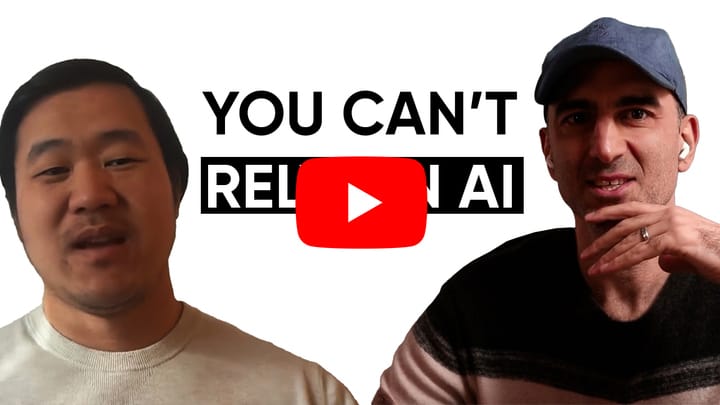
Champions don’t slow down. They don’t wait for shortcuts. And they definitely don’t have an off switch. No Off Button is where Aram sits down with founders and creators who treat their craft like a long game—obsessive execution, high standards, and zero excuses.
This week’s guest is Rocky Xu, a finance filmmaker who built a 700,000+ subscriber audience and became #1 in his niche by skipping the creator playbook entirely. From day one, Rocky approached YouTube like a media company—producing Netflix-level documentaries from his bedroom and focusing on assets that compound, not viral hits.
The conversation digs into lessons PE minds will recognize instantly: why consistency beats hacks, why distribution is power, why AI is a tool—not a replacement for judgment—and why real value is built by owning evergreen catalogs, not chasing weekly spikes.
Why it matters: this is capital allocation and brand-building logic applied to media. Long-term thinking, defensible taste, and doing the work when no one’s watching.
"Always bear in mind that your own resolution to succeed is more important than any other."
Abraham Lincoln